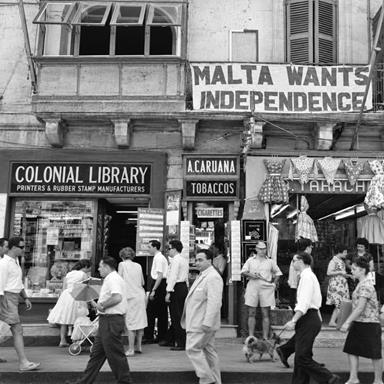
Malta’s journey to becoming an independent nation marks a defining chapter in Mediterranean history. When the island nation gained independence from Great Britain in 1964, it signaled the rise of a small state ready to take its place as a sovereign state on the global stage.
Following the end of the French occupation, Malta became a British Protectorate in 1800 and was formally recognised as a Crown Colony in 1814.
For over a century, local governance remained largely under British authority until 1921, when Malta was granted its first Self-Government Constitution. This landmark development established a bi-cameral legislature and represented an important step towards self-rule. Political instability later led to the suspension of self-government, temporarily returning Malta to direct British rule.
 A new constitution restored self-government in 1947, and introduced universal adult suffrage, giving Maltese women the right to vote for the first time. In 1958, following further political unrest, the constitution was suspended and direct colonial rule resumed. The 1961 Constitution restored self-government and paved the way for independence. In May 1964, the Maltese electorate voted in a referendum on a proposed constitution for an independent Malta. Following negotiations with the British Government, Malta formally gained independence on 21 September 1964.
Malta became a Constitutional Monarchy within the Commonwealth of Nations, with Queen Elizabeth II serving as Queen of Malta (Reġina ta' Malta). The monarch’s constitutional functions as head of state were exercised locally by the Governor-General. Sir Maurice Henry Dorman, who had served as Malta’s Governor from 1962, became the country’s first Governor-General upon independence. He was succeeded by Sir Anthony Mamo in 1971. Immediately upon gaining independence, Malta joined the United Nations (1 December 1964) and the Counsil of Europe (29th April 1965).
Malta remained a constitutional monarchy until 13 December 1974, when constitutional amendments established the country as a republic and Sir Anthony Mamo was appointed the first President of the Republic of Malta.
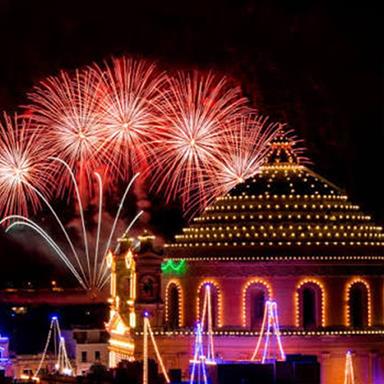
Today, Independence Day, or Jum l-Indipendenza, remains an important symbol in Malta’s political constitutional history. It honours the country’s determination, national identity and the generations whose aspirations helped Malta become a sovereign nation.
Francesca Marija Anne Gauci
Junior Administrative Assistant